


Financial Self-Care Routines for High Earners: Weekly, Monthly, and Annual Checklists
April 21, 2026
7 Non-Traditional Ways to Use Your 529 Plan Funds
May 19, 2026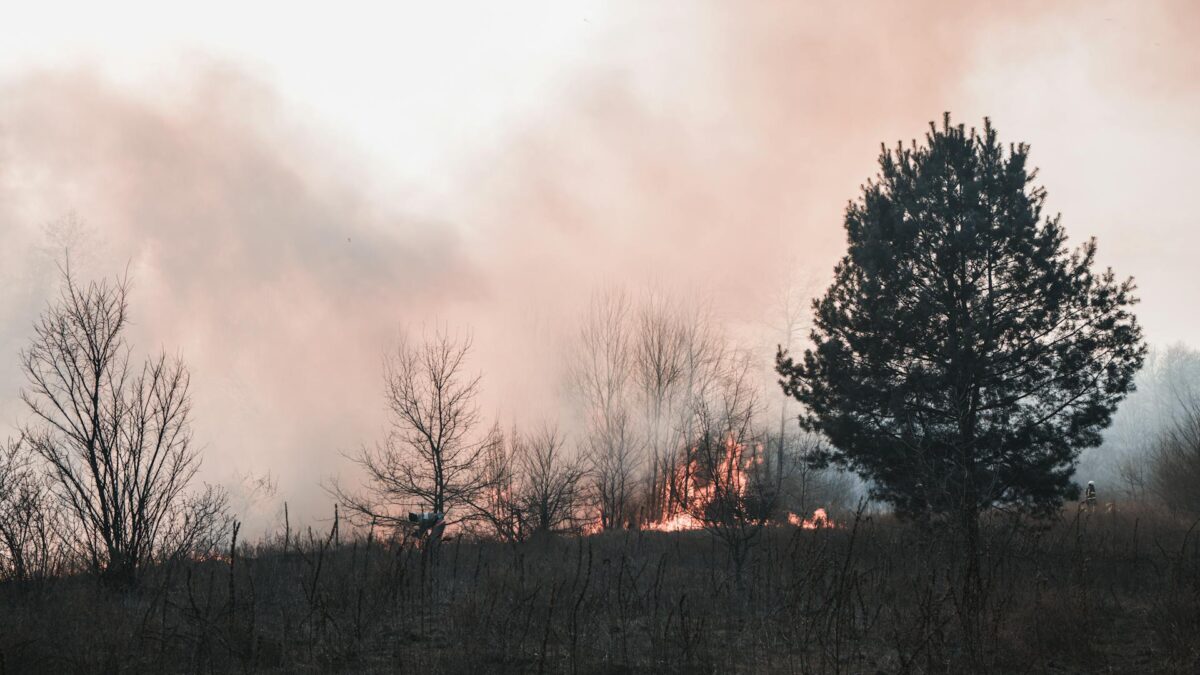
Wildfires in Southern California are no longer a distant possibility; they’ve become a regular part of life. And when you see neighborhoods evacuated or homes lost, it naturally leads to a more personal question: if this were our situation, would we be ready?
Climate and disaster risk planning goes beyond having a plan to leave the house. It touches your insurance coverage, your cash reserves, and the documents you’d need if you had to rebuild from scratch. In the middle of a crisis, those details can make the difference between scrambling under pressure and having a well-defined path forward.
This guide walks through the key areas to focus on so you can put a plan in place now, while you have the time and clarity to think it through.
Why Climate and Disaster Risk Belongs in Your Financial Plan
In recent years, wildfires have torn through Southern California, destroying neighborhoods, shutting down schools and businesses, and displacing families for months. In January 2025, Los Angeles County alone saw 260,000 people displaced, nearly matching the U.S. total for all of 2024. Some had robust insurance and strong financial safety nets, while many others were left navigating claims, temporary housing, and rebuilding costs with very little support.
Climate and disaster risk planning is really about three questions:
- How will you protect your assets (home, belongings, financial accounts)?
- How will you protect your cash flow (so a disaster doesn’t derail your broader goals)?
- How will you protect your decision-making (with documents, systems, and support in place before you need them)?
When you handle these areas ahead of time, you make it easier to stay clear-headed in the aftermath of a natural disaster.
Step #1: Understand What Your Insurance Covers
Many homeowners only realize how their coverage works after a wildfire hits. You want to understand your policy before you need to file a claim, not in the middle of one.
Key Questions to Ask About Your Homeowner’s Policy
If you aren’t familiar with your coverage, walk through these questions with your policy in front of you (or with your insurance agent on the phone):
- What is my dwelling coverage limit, and is it based on replacement cost or market value? Replacement cost aims to cover what it takes to rebuild, which can be very different from your home’s sale price in a hot market.
- Does my policy explicitly cover fire and smoke damage, and are there any wildfire-related exclusions? Some carriers have tightened terms in high-risk areas.
- What are my Additional Living Expenses (ALE) limits? ALE is what helps pay for hotels, short-term rentals, and extra costs if you’re displaced during repairs or rebuilding.
- What is my deductible, and is there a separate percentage-based deductible for wildfire claims? While a 2% deductible may seem low at first glance, it can translate into a significant out-of-pocket cost on a high home value.
- Am I insured through a traditional carrier, the California FAIR Plan, or a combination of policies? Understanding how these policies interact is critical when filing a claim.
- What does my policy exclude or limit (landscaping, fences, pools, outbuildings, or high-value items like jewelry and art)? If it doesn’t cover certain items, you may need to add riders or separate policies.
Create or Update Your Home Inventory
After a disaster, you’ll be asked to list what you lost, often while you’re still processing what happened. A simple inventory now can spare you hours of guesswork later.
- Take a room-by-room video walkthrough of your home, opening closets and drawers. Narrate major items and approximate brands or values as you go.
- Keep a basic itemized list of high-value belongings (electronics, instruments, collectibles) and update it once a year.
- Store your videos and lists in secure cloud storage, so they’re accessible even if your devices are damaged.
Consider Additional Coverage
For many high-earning families in high-risk areas, the basic homeowner’s policy is only a starting point. For more comprehensive coverage, you may also want to explore:
- Umbrella liability coverage for extra protection beyond your home and auto policies.
- Separate riders for jewelry, fine art, or collections that would be costly to replace.
- Coverage for home improvements. If you’ve renovated, updated your kitchen, or added living space, confirm that your policy reflects today’s rebuild cost.
Step #2: Build a Cash Reserve That Matches Your Risk
Most rules of thumb suggest 3–6 months of living expenses in an emergency fund. But if you live in a high-risk wildfire zone, it can make sense to set more cash aside, especially if you’re self-employed, rely on variable income, or own a home that could take months to repair or rebuild.
How Much Cash Is Enough?
Think about your cash reserve as separate funds: your core emergency fund, and an evacuation buffer.
Your core emergency fund should include:
- 3–6 months of essential living expenses (housing, food, utilities, insurance, debt payments).
- For high-risk areas or more complex financial lives, 6–9 months may be more appropriate.
Your evacuation buffer is a separate, smaller cushion earmarked for short-term displacement. These funds are available for hotels or short-term rentals, gas, pet boarding, meals out, and replacing basics like clothing and toiletries.
Your cash reserve should live in highly liquid, low-volatility accounts such as high-yield savings or money market accounts—places where you can access the money quickly without worrying about market swings.
Diversify Your Access to Cash
A disaster doesn’t just affect your home; it can also disrupt local infrastructure. To give yourself options, consider these additional steps:
- Maintain at least one bank or credit union relationship that isn’t limited to a single local branch network. Online banks can be useful here.
- Keep a modest amount of physical cash in a secure, fire-resistant safe at home in case electronic payments are temporarily unavailable.
- Preserve access to credit, such as an unused credit card or a HELOC, as a backup, not a primary plan. This can provide short-term flexibility while you wait on insurance claim payments.
Step #3: Get Your Documents Fire- and Disaster-Ready
In the aftermath of a wildfire, you may need to prove who you are, what you own, and what insurance coverage you had while also making time-sensitive decisions about your health care, finances, and property. That’s much easier to do when your documents are organized and accessible, even if your physical home isn’t.
What to Organize Now
It’s wise to create both physical and digital versions of your essential documents. You’ll want to gather the following:
- Identification: driver’s licenses, passports, Social Security cards.
- Vital records: birth certificates, marriage certificates, adoption records.
- Property records: home deed, mortgage documents, property tax statements, home improvement records.
- Insurance policies: homeowner’s, auto, umbrella, disability, life, and health insurance.
- Tax returns: at least the last 2–3 years.
- Estate planning documents: wills, trusts, powers of attorney, healthcare directives, beneficiary designations.
- Financial information: a simple list of bank, brokerage, and retirement accounts; employer plans; life insurance policies; and how to access each institution’s website or app.
How to Store Essential Documents
- Use a fireproof, waterproof safe at home for physical copies, and consider keeping backups in a safe deposit box or off-site location.
- Scan and store digital copies in secure cloud storage with strong passwords and two-factor authentication.
- Create a simple “grab-and-go” folder or binder that you can take with you quickly in an evacuation. You don’t need everything, just the most important items and instructions.
Don’t Forget Your Support Team
Disasters don’t wait for business hours. Make it easy to reach the people who can help you make decisions:
- Keep updated contact information for your financial planner, CPA, estate planning attorney, and insurance agent.
- Make sure at least one trusted person knows where your documents are and how to access them if you’re incapacitated or away.
Step #4: Wildfire-Specific Home and Property Planning
For Southern California homeowners, wildfire preparation is both a safety strategy and a financial strategy. A house that’s easier to defend and document is often easier to insure and rebuild.
Reduce Your Home’s Fire Risk
While you can’t control where a fire starts, you can potentially influence how it behaves when it reaches your property. Here are some preventative measures you can take to protect your home:
- Maintain defensible space by clearing brush, trimming trees, and removing flammable debris within 30–100 feet of your home, in line with local fire department guidance.
- Use or gradually transition to fire-resistant materials for roofing, siding, and vents when you remodel or replace components.
- Install ember-resistant vents and seal gaps around roofs, eaves, doors, and windows, where embers tend to enter.
- Regularly clean gutters and roofs, and move flammable items away from exterior walls.
These steps often complement the requirements your insurer or local regulations already have in place, and they can support your case when negotiating coverage or rates.
Document Your Property’s Condition
Your home inventory isn’t just about belongings; it’s also about the structure itself.
- Take clear, dated photos and videos of your home’s interior and exterior at least annually.
- Capture details such as roof age, HVAC systems, major appliances, and any recent upgrades.
- Save contractor invoices and permits for major work, as they can support your rebuild cost estimates and insurance claims.
Make Evacuation Easier on Your Future Self
In a fast-moving fire, you may have minutes, not hours, to leave. Preparing now can reduce the risk of last-minute, regret-filled decisions.
- Identify at least two evacuation routes and discuss them with your household.
- Create a family communication plan: where you’ll meet if separated, and how you’ll check in if cell service is spotty.
- Pack a “go bag” with basics: a change of clothes, medications, chargers, vital documents, a list of emergency contacts, and comfort items for kids or pets.
Step #5: Integrate Climate and Disaster Risk into Your Long-Term Financial Plan
For many families, wildfire season is now a predictable part of the calendar rather than an occasional anomaly. That reality has financial implications that go beyond a single event.
Here are several questions to walk through with your financial advisor:
- Does the location and risk profile of your home still align with your long-term goals and comfort level?
- If a large portion of your net worth is tied up in one property in a high-risk area, does it make sense to diversify your real estate exposure over time?
- How should you plan for rising insurance costs and potential coverage changes as carriers reassess climate risk in California?
- Are your estate documents and beneficiary designations set up so that your plan still works even if important documents are lost or your family is navigating a crisis?
These conversations help you build a plan that can absorb shocks, whether they come from the markets, the economy, or the hills behind your neighborhood.
You Don’t Have to Plan for Climate and Disaster Risk Alone
Planning for climate and disaster risk can feel like one more task on an already full plate. Between work, family, and everything else competing for your attention, it’s easy to put this off. But the reality is, these moments don’t wait until you’re ready. Taking the time to prepare now gives you more control when things feel uncertain and helps you avoid making rushed decisions under pressure.
At SageMint Wealth, we help individuals and families build financial plans that hold up in real life, not just on paper. That means thinking through risks like this in a practical, thoughtful way so you’re not left figuring it out on your own when it matters most. If you’d like a partner to walk through this with you and make sure your plan is set up to support you, reach out to get started.
Related posts